Research & Studies

iASK Research Fellow Ivana Stepanović has published a working paper titled Who Owns the Nation? Poster Wars, Political Graffiti and Semiotic Resistance in Hungary and Serbia, examining the street-level poster wars that accompanied the 2026 Hungarian parliamentary election campaign and the ongoing Serbian student protest movement of 2024 to 2026. Drawing on ethnographic observation of political poster landscapes in both countries, the paper analyses how citizen-led interventions on government campaign materials constituted a form of vernacular resistance under conditions of hybrid authoritarianism. In Hungary, the ruling Fidesz party’s monopoly over outdoor advertising infrastructure was met by creative modifications that inverted government messaging; in Serbia, the SNS government’s appropriation of the student movement’s slogans was countered through adjacent placements that redirected the meaning of the party’s own language. In both cases, the paper argues, physical interventions in shared public space were amplified through social media, creating a hybrid activist circuit in which the modified poster and its viral image operated as a single communicative event.
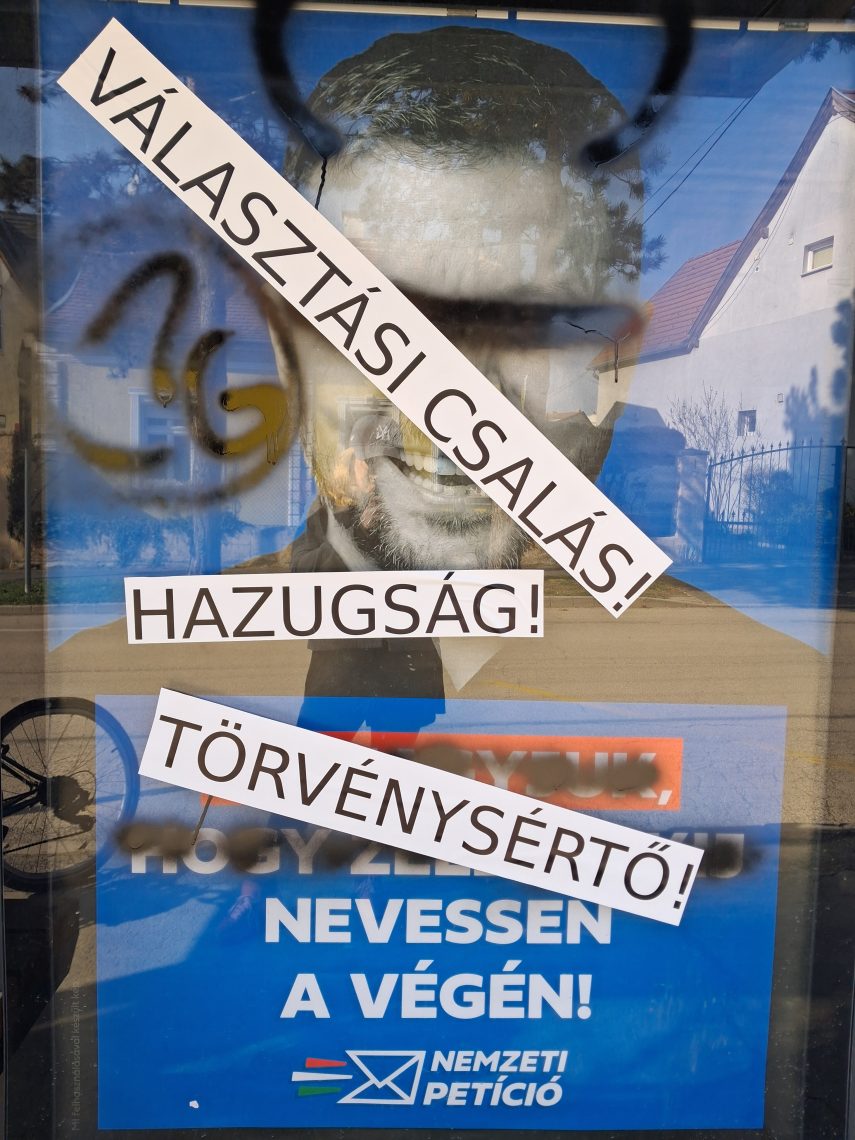
The paper’s central argument is that both resistance movements operated through what it terms antagonistic mirroring: the appropriation and reversal of the governing party’s own semiotic forms, working within the populist grammar of the opponent rather than against it. Drawing on semiotics, populist communication theory, and political ethnography, Stepanović shows that the ultimate stakes of these poster battles were not merely electoral but ontological: both movements contested the governing parties’ claim to exclusive ownership of national signifiers, asserting through sticker, tape, and spray paint that the nation belongs to all its citizens and not to the party that had monopolised its symbols. The paper is available as part of the iASK Working Paper series and contributes to the institute’s ongoing research on democratic resilience, civic activism, and political communication in Central and Southeast Europe.
Read the full paper in English HERE