Research & Studies
Annual Conference of the European Big History Network
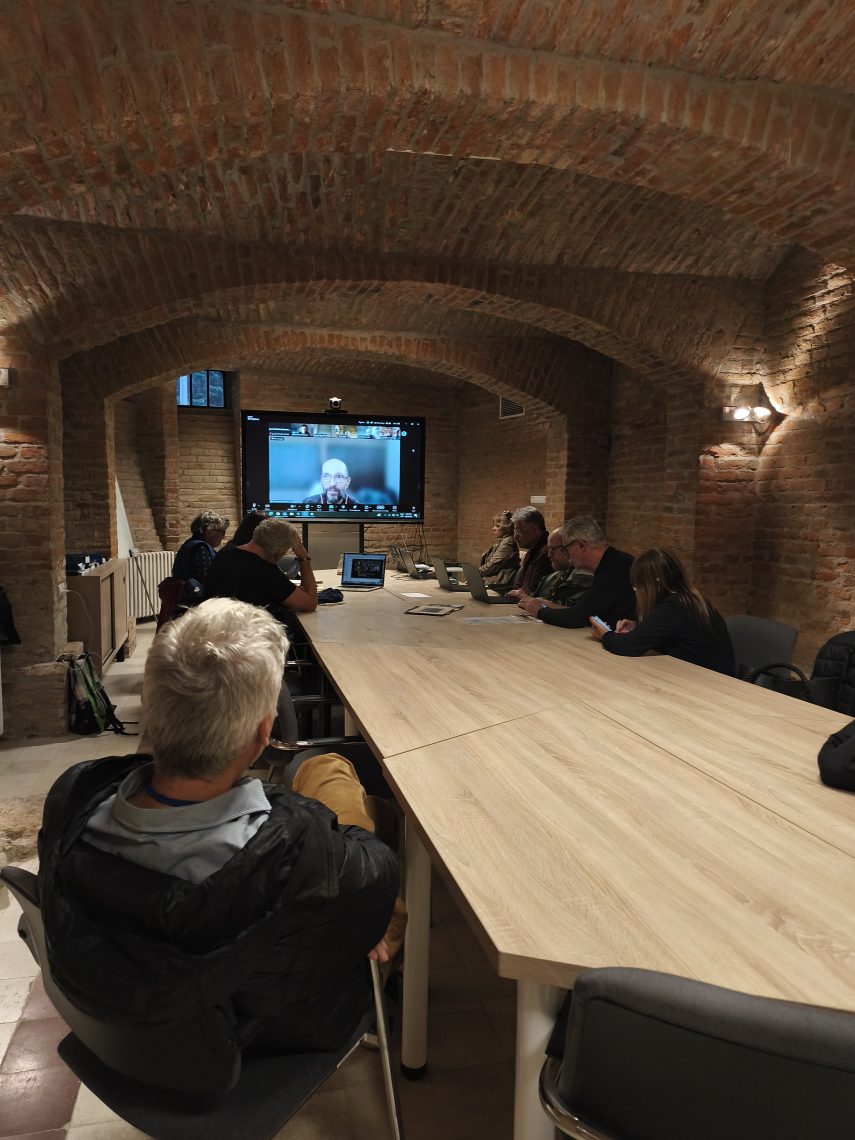
While the streets of Kőszeg were bustling with the Harvest Festival, from September 26–28, 2025, researchers and professionals who could attend in person gathered every day at the iASK building on Szemző Street for the annual conference of the European Big History Network – others followed the three-day event via Zoom.
Researchers and educators engaged in Big History, who approach fundamental questions of human existence by integrating the cosmic, geological, biological, and human history of the past billions of years, align closely with iASK’s professional mission, which champions multidisciplinary approaches. Those interested in the path from seeking shared explanatory causes of change to gaining a deeper understanding of causal relationships can start with David Christian’s book, published in Hungarian as well (A Nagy Történelem. A világegyetem és benne elfoglalt helyünk története, Akkord Kiadó, 2019).
The Kőszeg conference was organized around several exciting themes. Since Big History has long been included in university, high school, and even primary school curricula, a dedicated session focused on experiences to date (in Hungary, such a course was launched at ELTE, led by Károly Halmos and iASK researcher Mónika Mátay).
As a new step in experimenting with “Small Big History” (focusing on a selected, specific topic), participants examined in detail the research program and methodology of the “Big History of Fire.” iASK staff member László Z. Karvalics gave a short lecture on the “big history” of artificial intelligence and algorithmic thinking, while Mónika Mátay summarized the “small big historical” aspects of the “Talking Houses” program.
At the event, world-renowned social historian Andrej Korotajev presented his findings on the periodization of the Homo genus’s approximately 2.5-million-year history based on recent archaeological discoveries (Toward Periodization of the Biosocial Era of the Big History: A Reanalysis).
Participants also gained insights into how specialized large language models of artificial intelligence can become highly effective research-support tools, and several joint research programs were launched.
The success of the event contributed to the network members’ unanimous agreement that, starting in 2026, iASK will assume the “secretariat” functions of the European Big History Network.