
Research & Studies
Something is happening in this small Hungarian town that has never been seen before in the former Eastern Bloc
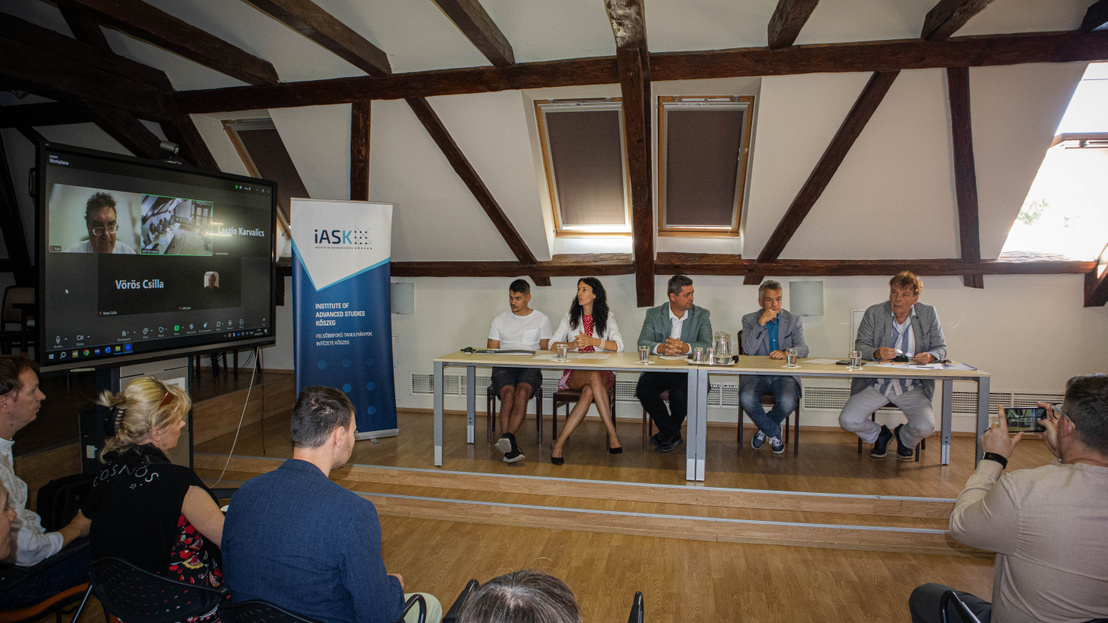
The United Nations University operates thirteen research and teaching centers worldwide. The fourteenth – becoming the first in the former Eastern Bloc – may be established in Kőszeg, Vas County. The host and partner institution will be the Institute of Advanced Studies Kőszeg (iASK). Ferenc Miszlivetz, director of iASK, embarked on a path within the academic world around the time of Hungary’s political transition that was highly unconventional for the country. Over the course of thirty years, he and his team built a project whose next stage will be the UNU research center in Kőszeg. Miszlivetz provided our newspaper with a detailed account of their journey.
According to a Prime Ministerial decree published in the Hungarian Gazette, the new United Nations University institute may be established in Kőszeg. Prime Ministerial instructions assigned Balázs Hankó, Minister for Culture and Innovation, and Péter Szijjártó, Minister of Foreign Affairs and Trade, to prepare for the project. As a new university research center for the Central and Eastern European region, the UNU institute will focus on understanding the international dimensions of peace and security, transformative technologies, and the societal and economic processes shaping the future. Based on the decision of the UNU Rector and the Hungarian government, the host partner will be the Institute of Advanced Studies Kőszeg.
UNU University?
The United Nations University (UNU) is a global organization of the UN dedicated to research and postgraduate education. UNU is an independent international institutional network aiming to engage the most outstanding members of the academic community in international policymaking, primarily within UN-related decision-making processes.
“What we do is, to put it mildly, atypical in Hungarian scientific life and higher education”
How did the story begin? – we asked the professor. Miszlivetz traced the origins back to Hungary’s transition period:
“What we do can be described as an atypical venture in Hungarian academia and higher education, shaped by many factors. I did not start alone; colleagues, friends, and mentors supported me in the early ’90s, including Elemér Hankiss, András Bródy, Iván Vitányi, and Jody Jensen, later joined by Academics György Schöpflin and Tamás Szentes. Even then, we did not entirely find our place within the transforming world of academic research institutes or the slowly changing university sector. We believed that in the social sciences, an interdisciplinary, broader, ‘holistic’ research perspective should be fostered – one that attracted our community, many foreign researchers, and young scholars. Institutions did not accept this, but the then mayor of Kőszeg had a different attitude. The town has a strong identity as an educational hub, so openness was natural. We built the project over thirty years, first instinctively, later with growing awareness.”
The international summer university was launched in 1996 and continues to operate, with 700–800 lecturers and many more students from around 120 countries participating. In 2011, the UNESCO Department for Cultural Heritage Management was established, alongside the concept for Creative City – Sustainable Reion. However, the private foundation lacked the resources to continuously renovate buildings. The government endorsed the Kőszeg vision: the ‘jewel-box’ town should become a venue of international standard for researchers investigating cross-disciplinary interconnections. Initially, ten buildings were proposed for renovation and operation with complementary functions; seven have been completed, and two are in progress. The professor briefly noted that redefining cultural heritage can also drive economic development, extending beyond mere infrastructure. The local community’s identity, traditions, and rich intercultural heritage are key components of these developments.
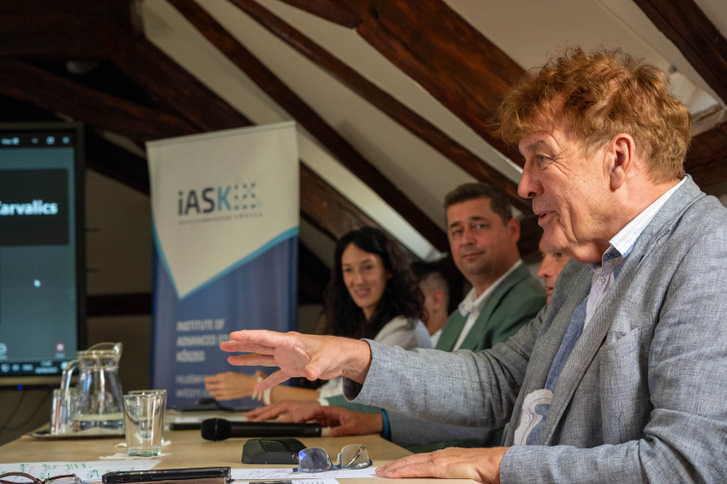
Miszlivetz also observed that Kőszeg inspires creative energy and deep, focused work. This dynamic is evident in the Pannon Cities Alliance, with close collaborations including Szombathely and Keszthely, while the KRAFT program supported Veszprém’s successful European Capital of Culture bid in 2023.
The professor emphasized that the process has faced many obstacles and temporary pauses but always moved forward. The government adopted the KRAFT program, deciding that Kőszeg would be the first stage, leading to the establishment of the Kőszeg KRAFT Program in 2012. An agreement with the Prime Minister’s Office ensured the ongoing support of the scientific and methodological aspects of forward-looking development projects.
“A great idea and a few committed people are not enough; high-level research is also necessary. This led to the creation of the Institute of Advanced Studies Kőszeg, which I have led for ten years. In science, there are several approaches: known knowns, known unknowns, unknown knowns, and unknown unknowns. Facing the unknown unknowns is the real challenge for us. We do not merely collect evidence to confirm already identified problems; we seek to confront what has not yet been recognized as an issue. This approach was embraced by Albert Einstein, John von Neumann, and Robert Oppenheimer,” he explained, adding that the institute is fundamentally not an ivory tower but connected to real-world challenges and regional issues. Researchers and universities must take responsibility for sustainability.
Every theoretical and methodological study should have an aspect that serves development. This, according to the professor, is the greatest innovation and the most challenging part of their story. It also attracts the most talented researchers: “Almost every researcher enjoys occasionally stepping outside the box they’ve worked in for twenty years, not only conducting measurements and collecting data in the usual way but searching for yet unknown correlations. For a true researcher, this is paradise. Yet few dare regularly confront the unknown unknowns. Most higher education institutions do not even consider it their task.”
Nevertheless, over the past decade, iASK has cultivated an exciting environment through its scholarship program, attracting many foreign researchers from literally every corner of the globe.
iASK’s Key Research Areas
Kőszeg as the First Location in the Former Eastern Bloc
Miszlivetz continued the story: in 2016, an international research community within the framework of the World Water Future visited iASK, holding preparatory seminars for their upcoming world conference at the Europa House. They asked for a presentation of the institute, particularly its KRAFT program.
“They were impressed, including Professor János Bogárdi, former head of UNU Bonn. A strong research collaboration developed, not only in water and sustainability but also in evolution, biology, history, and social sciences. From these discussions and joint seminars, a research network emerged, reinforcing our efforts and proving highly innovative. Full-time UNU researchers are not listed as external members, yet these external researchers are a tremendous asset for us and the country. Professor Bogárdi, a leading figure in this group, suggested that establishing a UNU institute in Kőszeg could be feasible.”
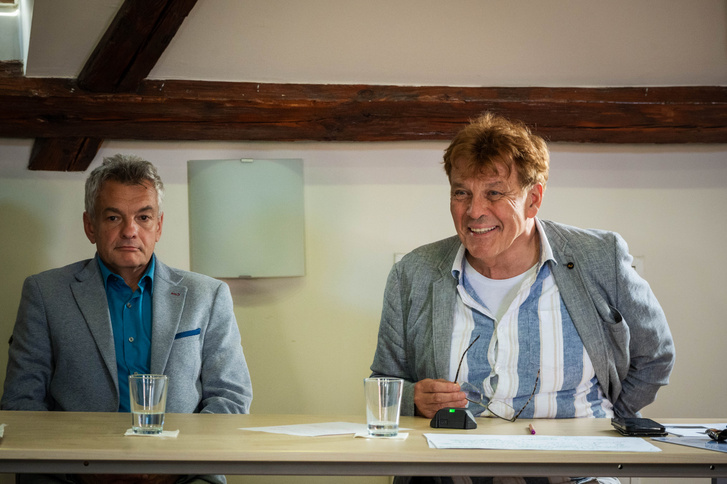
This marked the beginning of the planning that has now borne fruit. They connected with the new UNU Rector, Professor Tsilidzi Marwala, and numerous excellent researchers from European institutes. They were effectively integrated into the UNU network.
What makes the Kőszeg development particularly unique is that there is no similar institute in the former Eastern Bloc. UNU operates thirteen centers, including in Bruges, Maastricht, Helsinki, Bologna, and Dresden; Kőszeg will become the fourteenth.
Why Kőszeg? Miszlivetz revealed that the journey was not straightforward:
“While the UN is headquartered in New York and UNU in Tokyo, most UN institutions are in Vienna. Kőszeg is close to Vienna. In spring, at the rector’s request, a scoping committee visited us, thoroughly examining iASK, interviewing our researchers and international advisory board, and touring the town and renovated buildings. Mayor Béla Básthy played an active role in presenting the city. The committee, led by former Maastricht Rector Luc Soete, was initially skeptical, questioning whether Hungary could guarantee academic freedom and why such a small town, rather than Budapest, should host the institute.”
The visit overturned their initial skepticism:
“They saw that world-class researchers work here and have been affiliated with the institute for a long time. Astrophysics professors Szabolcs and Zsuzsa Márka from Columbia University, for example, participated in a Nobel-winning research project about ten years ago. Like many others, they wanted to apply their knowledge and international experience in Hungary. After visiting the country, they found the working environment and welcoming community they sought in Kőszeg. Similar commitments from other foreign colleagues likely convinced the committee that Kőszeg and iASK were the right venue and partner for a new UNU institute.”
“Two multi-day visits in April and May were a fantastic experience; I believe everyone was surprised by the intellectual intensity – the Kőszeg flow. We managed to convince the visitors.”
Finally, a study was prepared and approved by both the UNU Council and the Hungarian government, defining the new institute’s research areas. They focused on topics less represented in existing UNU portfolios but urgently relevant: war and peace, the prerequisites for sustained peace in the 21st century, associated challenges, and the many facets of human security. Research also includes transformative technologies.
Regarding teaching activities, the professor emphasized: “We are not a university ourselves, but we cooperate with domestic and international universities in both education and research. An international interdisciplinary doctoral school could provide an excellent framework for collaborations, allowing Hungarian universities to work directly with UNU’s global network. This has long been our goal, which has now become timely. The world of networked collaboration has reached higher education, requiring equality, trust, and a ‘win-win’ approach.”
Ferenc Miszlivetz underlined that UNU guarantees complete academic independence, and even the UN Secretary-General cannot intervene in research processes. “It will take a year to a year and a half to finalize the foundation conditions and begin establishing the new institute. Our institute is a research and development center supported by the Hungarian government, while UNU is entirely independent; we are simply the host partner. An exciting collaboration lies ahead.”
This article was originally published in Hungarian by Index, written by Németh Márton Sándor.